What Causes Eye Floaters, and When Should You Worry?
Independent guide · affiliate disclosure: RetinaClear.com is an independent publisher, not the manufacturer or seller. Some links on this page are affiliate links and we may earn a commission — at no extra cost to you — if you buy through them. This article is general information, not medical advice.
| What they are | Specks, threads or cobwebs that drift across your vision, most obvious against a plain bright background. |
| Main cause | Age-related changes in the vitreous gel inside the eye, which liquefies and clumps, casting shadows on the retina. |
| Usually | Harmless and long-standing; the brain gradually learns to tune them out. |
| Worry & act fast | A sudden shower of new floaters, flashes of light, or a shadow or curtain across your side vision — get same-day care. |
| Floaters that are an emergency | A sudden shower of new floaters, new flashes of light, or a curtain or shadow across your vision can mean a retinal tear or detachment. Seek care within hours. |
| Call emergency services | Sudden blurring or double vision alongside headache, weakness, facial droop or slurred speech can be a stroke. |
| Same-day eye assessment | Sudden loss of vision, a dark curtain or shadow across your sight, a burst of new flashing lights, a sudden shower of floaters, or severe eye pain. |
| Also urgent | Any blow to the eye, a penetrating injury or a chemical splash. Irrigate a chemical splash with clean water immediately, then get help. |
| Not a supplement question | None of the above is treated by a dietary supplement. RetinaClear is not a treatment, drug or cure for macular degeneration, glaucoma, cataract, diabetic retinopathy or any other eye disease. |
Almost everyone sees them eventually: tiny specks, squiggly threads or faint cobwebs that drift lazily across your vision, dart away when you try to look at them, and are most noticeable when you stare at a bright, plain surface like a clear sky or a white screen. These are eye floaters, and if you have suddenly become aware of them you are in very good company. Floaters are one of the most common visual experiences there is, and the great majority are completely harmless. But because a small number can signal something urgent, it is genuinely worth understanding what causes them and, more importantly, knowing the warning signs that mean you should not wait.
What eye floaters actually are
To understand floaters, picture the inside of your eye. Behind the lens, the large chamber at the back of the eye is filled with a clear, jelly-like substance called the vitreous humour. In youth this gel is firm and evenly transparent, holding its shape like a fresh dessert jelly. Threaded through it is a fine scaffold of collagen fibres, so sparse and so perfectly clear that light passes straight through without you noticing anything at all.
Floaters are the shadows of tiny clumps and strands that form within that gel. When a fibre thickens, folds, or a small pocket of the gel condenses, it stops being invisible. Light entering the eye casts the shadow of that speck onto the retina, the light-sensing layer at the back of the eye, and your brain interprets the shadow as an object floating in front of you. That is why floaters seem to move with your eyes and then drift on a moment after you stop — you are watching a shadow suspended in a slowly moving gel, not something on the surface of your eye.
What causes eye floaters
There is no single cause, but the reasons cluster into a few clear groups. The overwhelmingly common one is simply time.
1. Age-related changes in the vitreous
This is by far the leading reason people develop floaters. From around the age of 40, and increasingly into the 50s, 60s and beyond, the vitreous gel gradually liquefies — a normal process sometimes called syneresis. As it does, the collagen scaffold loses its even spacing and the fibres begin to clump. Those clumps are the classic threads and cobwebs of middle-aged floaters. This is part of the broader pattern of age-related vision changes after 40, and on its own it is not a disease — it is one of the most universal features of an aging eye.
2. Posterior vitreous detachment (PVD)
As the gel continues to shrink and liquefy, it can eventually peel away from the retina at the back of the eye. This event, a posterior vitreous detachment, is extremely common with age and is usually harmless in itself. However, it often announces itself with a sudden and noticeable increase in floaters, sometimes accompanied by brief flashes of light. Because a PVD can occasionally tug hard enough to tear the retina, any sudden change of this kind deserves a prompt professional check even though most PVDs turn out fine.
3. Nearsightedness, eye surgery and inflammation
People who are significantly nearsighted (short-sighted) tend to develop vitreous changes and floaters earlier, because the eyeball is longer and the gel is under more strain. Previous eye surgery, such as cataract removal, and any inflammation inside the eye can also increase floaters. In these cases the floaters are a by-product of the underlying situation rather than a problem in their own right.
Support your eyes with daily nutrient care
No supplement dissolves a floater — but a colourful diet and steady nutrient support are part of looking after your eyes for the long run. RetinaClear brings lutein, zeaxanthin, bilberry and a full spectrum of vision vitamins into one daily capsule, backed by a 60-day money-back guarantee.
See RetinaClear Packages4. Flashing lights and the retina
Sometimes people notice brief arcs or flashes of light, especially in the corner of their vision or in the dark. These flashes happen when the vitreous gel tugs on the retina, mechanically stimulating it so that the brain registers light that is not really there. Occasional, isolated flashes are common as the vitreous ages, but flashes arriving together with a burst of new floaters are exactly the combination that should be checked quickly.
When eye floaters are harmless
Here is the reassuring part. If you have had the same few floaters for months or years, if they drift gently and are only obvious against bright plain backgrounds, and if your vision is otherwise clear and stable, they are almost certainly benign age-related floaters. Most people find that these long-standing floaters gradually become less bothersome, not because they disappear but because they drift out of the central line of sight and the brain quietly learns to filter them out — the same way you stop noticing the frame of your own glasses.
There is, unfortunately, no simple everyday fix that erases an existing floater. The particle remains in the gel. Eye drops, exercises and supplements will not dissolve it. What genuinely helps is time, patience and the brain's remarkable ability to adapt. Good lighting habits help too: a plain matte background and softer, more even lighting make floaters far less prominent than a glaring white screen or a bright blue sky.
When to worry about eye floaters
This is the most important section, so read it carefully. While most floaters are harmless, a specific pattern of symptoms can mean the retina is tearing or detaching — a genuine emergency where acting within hours rather than days can protect your sight. Seek same-day assessment from an eye-care professional, an emergency eye clinic or urgent care if you notice any of the following:
- A sudden shower of new floaters — many more than usual, appearing over minutes or hours.
- Flashes of light, particularly repeated flashes in the same part of your vision.
- A shadow, curtain or veil creeping across your side (peripheral) vision.
- A sudden loss or dimming of part of your field of view.
- New floaters after a blow to the eye or head, or following eye surgery.
These signs do not always mean a detachment, but only a professional examination can tell. Retinal tears caught early can often be treated promptly to reduce the risk of a more serious detachment, which is precisely why the timing matters so much. If your night driving has also become harder around the same time, our guide to why night vision gets worse covers related changes worth mentioning at your appointment. When in doubt, get checked — no eye-care professional will mind you being cautious about your sight.
Everyday habits that support healthy eyes
Since you cannot scrub away floaters, the practical goal is to look after the overall health of your eyes and to make existing floaters less intrusive. None of this treats floaters, but it is sensible eye care that pays off in comfort and long-term wellness.
Manage the background, not the floater
Reduce the glare of bright uniform surfaces. Lower screen brightness to match your room, switch documents to a softer off-white, wear sunglasses on bright days, and position lighting so it is even rather than harsh. Floaters practically vanish against a textured, moderately lit backdrop.
Stay hydrated and rest your eyes
Tired, dry eyes make every visual quirk more noticeable. Regular screen breaks, blinking fully and staying well hydrated keep the eye surface smooth and comfortable. If dryness is part of your picture, why your eyes feel dry and tired walks through the fixes.
Feed your eyes a colourful diet
The retina and the wider eye thrive on antioxidants and specific nutrients. Leafy greens, orange and yellow vegetables, oily fish, eggs and berries supply lutein, zeaxanthin, vitamin C, vitamin E, zinc and omega-3 fatty acids — nutrients associated with general eye health. This will not remove a floater, but it is part of caring for the eye as a whole. For the full menu, see the best foods for eye health and vision.
One daily capsule, a full vision blend
Give your eyes steady, everyday nutrient support with lutein, zeaxanthin, bilberry, vitamin A and a full-spectrum formula — made in the USA in an FDA-registered, GMP-certified facility. Best value on the multi-bottle packs.
Order RetinaClear Today
Where a daily supplement fits
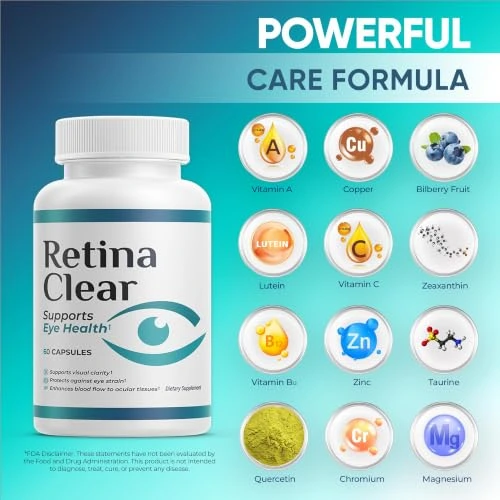
To be completely clear, RetinaClear is not a treatment for floaters, a posterior vitreous detachment or any retinal condition, and it is no substitute for an eye exam. What it offers is the nutrient-first foundation that supports comfortable, everyday eyes as part of a broader routine: lutein and zeaxanthin, which the body cannot make and which build the macular pigment; bilberry, long associated in traditional use with eye comfort; and vitamin A alongside a spread of supporting vision vitamins and minerals. Because these nutrients build up gradually, consistency is what matters. Think of a daily supplement as long-term support that sits alongside good habits and professional care — never in place of them.
| Who we are | An independent team that researches and reviews everyday eye-health questions in clear, practical language. |
| How we work | Every guide is fact-checked against reputable eye-care sources and kept up to date. Read more about us. |
What the research says about floaters and flashes
Most floaters come from ordinary age-related changes in the vitreous gel, but a sudden shower of them — especially with flashes — is one of the few eye symptoms that genuinely needs same-day assessment.
A Primary Care review on flashes and floaters sets out how clinicians separate the harmless from the urgent (PMID 26319347), and a JAMA rational-clinical-examination article asks the question directly: in acute-onset floaters and flashes, is this patient at risk for retinal detachment? (PMID 19934426). The short answer is that new symptoms deserve a dilated examination rather than reassurance over the phone.
Timing matters too. A study in Ophthalmology Retina reported the incidence and risk factors for delayed retinal tears after an acute, symptomatic posterior vitreous detachment (PMID 36307014) — which is why a follow-up appointment is often arranged even when the first examination is clear.
Floaters usually arrive in the same decade as other ordinary changes, described in age-related vision changes after 40. If glare and low light are also bothering you, see why your night vision is getting worse and why your eyes are sensitive to light.
FAQ
What causes eye floaters?
Most floaters come from age-related changes in the vitreous, the clear gel that fills the eye. Over time the gel liquefies and its collagen fibres clump together, casting tiny shadows on the retina that you see as specks, threads or cobwebs. They are extremely common and usually harmless, though a sudden shower of new floaters should always be checked.
Are eye floaters a sign of something serious?
Occasional floaters that have been there for years are almost always benign. The warning pattern is different: a sudden increase in floaters, flashes of light, a shadow or curtain across your side vision, or a grey veil. Those can signal a retinal tear or detachment and need same-day assessment by an eye-care professional.
Do floaters ever go away on their own?
Many floaters become less noticeable over weeks to months as they drift out of your direct line of sight and your brain learns to ignore them. The floater itself usually remains in the eye rather than dissolving, but most people stop noticing it. Persistent, vision-blocking floaters should be discussed with a professional.
Can diet or supplements reduce floaters?
No food or supplement dissolves an existing floater. That said, a colourful diet rich in antioxidants, carotenoids like lutein and zeaxanthin, vitamin C and omega-3s supports the overall health of the eye as part of a general wellness routine. Think of nutrition as long-term support for eye health, not a treatment for floaters.
Does screen time cause floaters?
Screens do not create floaters, but staring at a bright, uniform background like a white document or blue sky makes existing ones far more obvious. If your floaters seem worse at the computer, they were likely already present and simply easier to spot against the plain backdrop.
References
- Flashes and Floaters (Primary Care, 2015 · PMID 26319347)
- Acute-onset floaters and flashes: is this patient at risk for retinal detachment? (JAMA, 2009 · PMID 19934426)
- Incidence and Risk Factors for Delayed Retinal Tears after an Acute, Symptomatic Posterior Vitreous Detachment (Ophthalmology Retina, 2023 · PMID 36307014)
- National Eye Institute — Floaters
- NIH Office of Dietary Supplements — Vitamin A and Carotenoids fact sheet
- National Eye Institute. “Floaters” and “Vitreous Detachment.” nei.nih.gov.
- American Academy of Ophthalmology. “What Are Floaters and Flashes?” aao.org.
- American Optometric Association. “Spots and Floaters.” aoa.org.
- National Institutes of Health, Office of Dietary Supplements. “Lutein and Zeaxanthin” and “Vitamin A.” ods.od.nih.gov.
† These statements have not been evaluated by the Food and Drug Administration. This product is not intended to diagnose, treat, cure or prevent any disease. This article is for general information only and is not medical advice; consult a qualified eye-care professional about your individual needs, and seek urgent care for the warning signs described above.