Why Is My Night Vision Getting Worse? Causes and Support
Independent guide · affiliate disclosure: RetinaClear.com is an independent publisher, not the manufacturer or seller. Some links on this page are affiliate links and we may earn a commission — at no extra cost to you — if you buy through them. This article is general information, not medical advice.
| What you notice | Dimmer, slower vision in low light, more glare and halos around headlights, and tiring night driving. |
| Everyday causes | Normal aging, an out-of-date prescription, dry eyes scattering light, low vitamin A and slow dark adaptation. |
| What helps | Current glasses, clean lenses, managing glare, good vitamin A intake and a colourful, eye-healthy diet. |
| See a professional | If it worsens quickly, affects safe driving, or comes with tunnel vision, floaters or flashes. |
| Night vision loss that is urgent | A rapid change in night vision, a shrinking side field, new flashes or a curtain across your sight needs prompt professional assessment. |
| Call emergency services | Sudden blurring or double vision alongside headache, weakness, facial droop or slurred speech can be a stroke. |
| Same-day eye assessment | Sudden loss of vision, a dark curtain or shadow across your sight, a burst of new flashing lights, a sudden shower of floaters, or severe eye pain. |
| Also urgent | Any blow to the eye, a penetrating injury or a chemical splash. Irrigate a chemical splash with clean water immediately, then get help. |
| Not a supplement question | None of the above is treated by a dietary supplement. RetinaClear is not a treatment, drug or cure for macular degeneration, glaucoma, cataract, diabetic retinopathy or any other eye disease. |
How night vision actually works
Seeing in the dark is one of the eye's most impressive tricks, and understanding it makes the reasons your night vision might be getting worse much clearer. Your retina contains two kinds of light-sensing cells: cones, which handle colour and detail in bright light, and rods, which take over in dim conditions. Rods rely on a light-sensitive pigment called rhodopsin, and rhodopsin is built using vitamin A. When you step from a bright room into the dark, your rods need time — often 20 to 30 minutes for full sensitivity — to regenerate rhodopsin and adapt. That gradual process is called dark adaptation.
Night vision depends on three things working well: enough light reaching the retina, healthy rods with plenty of rhodopsin, and a clear optical path that does not scatter what little light there is. Anything that interferes with those — and several everyday things do — can leave you feeling that the dark has become harder to navigate. The good news is that many of the common causes are ordinary and manageable.
Why your night vision may be getting worse
1. Normal aging
This is the most common reason of all. With age the pupil gets smaller, so less light reaches the retina, and the lens stiffens and can yellow slightly, dimming and scattering incoming light. Dark adaptation also slows down, so it takes longer for your eyes to adjust when the lights go out. This is part of the broader pattern of age-related vision changes after 40, and it is why night driving so often feels more demanding as the years pass.
2. Glare and halos from an aging lens
An aging or clouding lens scatters light rather than focusing it cleanly, which produces glare and halos around bright sources — exactly what makes oncoming headlights so dazzling. If glare is your main complaint, it is worth an eye exam, because increasing glare can be an early sign of lens changes that a professional should assess.
3. An out-of-date glasses prescription
A surprising amount of "my night vision is failing" is simply a prescription that is a year or two behind, or lenses that are dirty, scratched or lack an anti-reflective coating. Even a small uncorrected refractive error is magnified in low light, when your pupil is wide and depth of focus is at its narrowest. An up-to-date pair of glasses with clean, anti-reflective lenses is often the single biggest night-vision upgrade available.
4. Dry eyes scattering light
A smooth tear film is part of the eye's optical system. When the surface dries out, it becomes irregular and scatters light, adding to glare and blur — especially noticeable at night behind the wheel. If your eyes feel gritty and tired, our guide to why eyes feel dry and tired covers the fixes, many of which quietly help night vision too.
5. Low vitamin A
Because rhodopsin is built from vitamin A, a genuine deficiency impairs the rods' ability to work in dim light — poor night vision is a classic early sign. Deficiency is uncommon in people eating a varied diet, but restrictive eating or absorption problems can cause it. Getting enough vitamin A from foods such as eggs, dairy, liver and beta-carotene-rich vegetables like carrots and sweet potato supports normal low-light vision. To be clear, loading up beyond your needs will not create superhuman night sight — it simply keeps a necessary system running.
6. Fatigue, alcohol and medications
Tired eyes adapt to the dark more slowly, alcohol can impair night vision and dark adaptation, and some medications affect pupil size or dryness. If your night vision is noticeably worse on some evenings than others, these temporary factors may be part of the story.
Give low-light eyes daily nutrient support
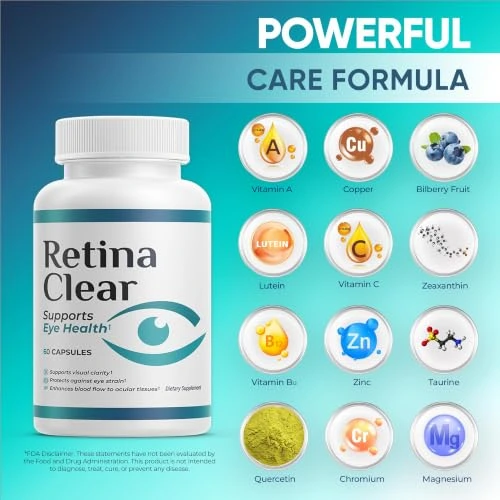
RetinaClear pairs lutein, zeaxanthin and bilberry — long associated with eye comfort — with vitamin A and a full spectrum of vision vitamins and minerals in one daily capsule. Backed by a 60-day money-back guarantee.
See RetinaClear PackagesEveryday ways to support your night vision
Some causes need a professional, but plenty is within your control. These habits reduce glare, keep the system well supplied and make the most of the vision you have.
Keep glasses current and lenses clean
Get regular eye exams so your prescription stays accurate, choose an anti-reflective coating to cut glare, and keep lenses spotless. Never wear tinted or dark lenses for night driving — they reduce the already-limited light reaching your eyes.
Manage glare while driving
Dim your dashboard, keep your windscreen clean inside and out (a filmy screen scatters light badly), and look slightly to the lower-right edge of your lane rather than directly at oncoming headlights so the glare does not wash out your vision.
Give your eyes time to adapt
Dark adaptation takes time, so avoid looking at bright phone screens right before or during night driving, and let your eyes settle when you move into a dark space rather than assuming the worst.
Eat for low-light vision
A colourful, whole-food diet supplies the vitamin A, carotenoids and antioxidants the retina relies on. Beta-carotene-rich vegetables, eggs, dairy, oily fish and leafy greens all pull their weight — our guide to the best foods for eye health and vision makes it simple. For the wider picture, see daily habits to protect your eyesight naturally.
Where a daily supplement fits
Food first, always — but the nutrients that support low-light vision are ones a busy diet can fall short on. Vitamin A underpins rhodopsin, the pigment your rods use in the dark; the carotenoids lutein and zeaxanthin build the macular pigment that helps manage light and glare; and bilberry has a long traditional association with eye comfort and low-light vision. Because the body cannot make lutein and zeaxanthin, they must come from diet or supplementation.
That is the everyday, nutrient-first idea behind RetinaClear: a once-daily capsule combining lutein, zeaxanthin and bilberry with vitamin A and more than a dozen supporting vision vitamins and minerals, designed to help fill the gaps as part of a broader routine. It is not a treatment for any night-vision condition and it is no substitute for an eye exam — think of it as the nutrient foundation your habits and professional care sit on. As always, consistency matters, since these nutrients build up gradually.
One capsule, a full vision blend
Support comfortable, everyday eyes — day and night — with lutein, zeaxanthin, vitamin A and a full-spectrum formula, made in the USA in an FDA-registered, GMP-certified facility. Best value on the multi-bottle packs.
Order RetinaClear Today
When worsening night vision needs a professional
Gradual, mild change with age is usually ordinary. But some patterns warrant prompt attention: night vision that worsens noticeably or suddenly, difficulty driving safely after dark, or night-vision trouble alongside tunnel vision, new floaters or flashes, or loss of side vision. Several treatable conditions can affect night vision, and a few inherited ones show up first as difficulty in the dark. An eye-care professional can identify the cause and, where needed, act early — which almost always gives you more and better options.
| Who we are | An independent team that researches and reviews everyday eye-health questions in clear, practical language. |
| How we work | Every guide is fact-checked against reputable eye-care sources and kept up to date. Read more about us. |
What the research says about night vision
Seeing in the dark depends on three things: the retina’s rod cells, how clear the lens is, and how much light scatters on the way in — and it is usually the scatter that changes first.
A study in Applied Ergonomics examined cataract halos as a driving hazard in ageing populations, using a halometer to assess intraocular light scatter (PMID 18814857). Scatter is why oncoming headlights bloom long before anyone is told they have a cataract worth operating on.
The consequences are measurable on the road. Research in Investigative Ophthalmology & Visual Science found that even moderate visual impairments degrade drivers’ ability to see pedestrians at night (PMID 22427575) — a reason to book the eye test rather than to buy anything.
Nutrition matters at the extreme end only. Vitamin A deficiency causes xerophthalmia, in which night blindness is an early sign, as reviewed in World Review of Nutrition and Dietetics (PMID 23008038) — but that is a deficiency state, and in a well-fed adult taking more vitamin A will not sharpen night vision. If glare is your main complaint, read why your eyes are sensitive to light; if the change came with new specks or flashes, read what causes eye floaters and when to worry; and for the wider midlife picture, age-related vision changes after 40.
FAQ
Why is my night vision getting worse?
Common everyday reasons include normal aging (a smaller pupil and stiffer, slightly yellowed lens let in less light), increased glare from headlights, an out-of-date glasses prescription, dry eyes that scatter light, and low vitamin A. Persistent or sudden worsening should be assessed by an eye-care professional, as some causes need clinical attention.
Does vitamin A help night vision?
Vitamin A is essential for making rhodopsin, the light-sensitive pigment your retina uses in dim conditions, so a genuine deficiency impairs night vision. Getting enough vitamin A from foods such as liver, eggs, dairy and beta-carotene-rich vegetables supports normal low-light vision, though extra beyond your needs will not create superhuman sight.
Why are headlights so glaring at night now?
As the lens ages it scatters more light, producing glare and halos around bright sources like headlights. Dry eyes and smudged or outdated glasses make it worse. Keeping lenses clean, prescriptions current and eyes well lubricated all help reduce night-time glare.
Can dry eyes affect night vision?
Yes. A smooth tear film is part of the eye's optics, so when the surface dries out it scatters light and adds glare and blur — often most noticeable while night driving. Managing dry eye frequently improves low-light comfort too.
When should I see a professional about night vision?
See an eye-care professional if your night vision worsens noticeably or suddenly, if you struggle to drive safely after dark, or if it comes with other changes such as tunnel vision, floaters or flashes. Several treatable conditions affect night vision, and early assessment gives you the most options.
References
- Cataract halos: a driving hazard in aging populations. Implication of the Halometer DG test for assessment of intraocular light scatter (Applied Ergonomics, 2009 · PMID 18814857)
- Even moderate visual impairments degrade drivers' ability to see pedestrians at night (Investigative Ophthalmology & Visual Science, 2012 · PMID 22427575)
- Xerophthalmia (World Review of Nutrition and Dietetics, 2012 · PMID 23008038)
- National Eye Institute — Learn About Eye Health
- NIH Office of Dietary Supplements — Vitamin A and Carotenoids fact sheet
- National Eye Institute. “Night Blindness (Nyctalopia)” and “How the Eyes Work.” nei.nih.gov.
- American Academy of Ophthalmology. “What Is Night Blindness?” and “Glare and Halos.” aao.org.
- American Optometric Association. “Night Vision and Driving.” aoa.org.
- National Institutes of Health, Office of Dietary Supplements. “Vitamin A and Carotenoids.” ods.od.nih.gov.
† These statements have not been evaluated by the Food and Drug Administration. This product is not intended to diagnose, treat, cure or prevent any disease. This article is for general information only and is not medical advice; consult a qualified eye-care professional about your individual needs.