Why Are My Eyes Sensitive to Light? Brightness and Glare
Independent guide · affiliate disclosure: RetinaClear.com is an independent publisher, not the manufacturer or seller. Some links on this page are affiliate links and we may earn a commission — at no extra cost to you — if you buy through them. This article is general information, not medical advice.
| What it is | Photophobia — discomfort or squinting in bright or even normal light, from sunlight to a phone screen. |
| Everyday causes | Dry eye, tired and strained eyes, glare, uncorrected vision, pale eye colour and general fatigue. |
| What helps | Lubricating drops, screen breaks, UV sunglasses outdoors, anti-reflective lenses and even indoor lighting. |
| See a professional | If it is sudden or severe, affects one eye, or comes with pain, redness, headache or blurred vision. |
| Light sensitivity that is urgent | New light sensitivity with eye pain, a red eye, severe headache, a stiff neck or blurred vision needs same-day assessment. |
| Call emergency services | Sudden blurring or double vision alongside headache, weakness, facial droop or slurred speech can be a stroke. |
| Same-day eye assessment | Sudden loss of vision, a dark curtain or shadow across your sight, a burst of new flashing lights, a sudden shower of floaters, or severe eye pain. |
| Also urgent | Any blow to the eye, a penetrating injury or a chemical splash. Irrigate a chemical splash with clean water immediately, then get help. |
| Not a supplement question | None of the above is treated by a dietary supplement. RetinaClear is not a treatment, drug or cure for macular degeneration, glaucoma, cataract, diabetic retinopathy or any other eye disease. |
You step outside on a bright morning and your eyes clamp shut. The overhead lights at the office feel harsh by mid-afternoon. Your phone screen at night makes you wince. If bright light suddenly feels uncomfortable, you are experiencing what eye-care professionals call photophobia — light sensitivity. The name sounds dramatic, but for most people the everyday version is not a fear of light and not a disease. It is a signal that the surface of your eye is irritated, tired or working harder than it should, and it usually responds well to a handful of simple changes. Here is what causes it and what genuinely helps.
What light sensitivity actually is
Light sensitivity is discomfort in response to light — a need to squint, look away or seek shade in brightness that would not normally bother you. It sits on a spectrum, from a mild aversion to bright sunshine all the way to genuine pain in ordinary indoor light. The eye is beautifully engineered to handle a huge range of brightness by adjusting the pupil, but when the eye surface is irritated or the visual system is fatigued, that same light starts to register as discomfort rather than simply information.
People with lighter-coloured eyes tend to be more sensitive to light in general, because a paler iris lets a little more light scatter through. That is a normal variation, not a problem. What matters is whether your sensitivity is new, worsening, or tied to other symptoms — and, for the everyday causes below, what you can do to make bright light comfortable again.
Why your eyes may be sensitive to light
1. Dry eyes
This is one of the most common everyday causes. A smooth, healthy tear film keeps the eye surface comfortable and lets light pass cleanly. When the surface dries out, it becomes irritated and uneven, scattering light and making brightness feel harsh. Dry eye and light sensitivity so often travel together that treating one frequently eases the other. If gritty, tired eyes are part of your day, our full guide to why eyes feel dry and tired covers the causes and fixes.
2. Tired and strained eyes from screens
Long hours of close focus on screens leave the focusing muscles fatigued and the eye surface dry from reduced blinking. Fatigued eyes are more reactive to light, so by late afternoon the same screen or the same office lighting can start to feel uncomfortable. Screen glare compounds it. For a full routine, see how to reduce eye strain from screens.
3. Glare and harsh lighting
Glare — from sunlight bouncing off water or a road, from bright headlights, or from a mix of harsh and dim lighting indoors — makes the eyes strain to cope. An aging lens scatters more light too, which is one reason light sensitivity and glare can creep up gradually over the years as part of age-related vision changes after 40. Managing glare with the right lenses and lighting makes a real difference.
4. Uncorrected or out-of-date vision
When your eyes are straining to focus because a prescription is out of date or a refractive error is uncorrected, everything feels more effortful, including tolerating bright light. A current, accurate prescription — ideally with an anti-reflective coating — often quietly reduces sensitivity.
5. Fatigue, sleep and general run-down
Like the rest of you, your eyes are more sensitive when you are exhausted or unwell. A poor night's sleep, a heavy cold or a migraine can all crank up light sensitivity temporarily. This kind of sensitivity usually fades as you recover.
Support comfortable, everyday eyes
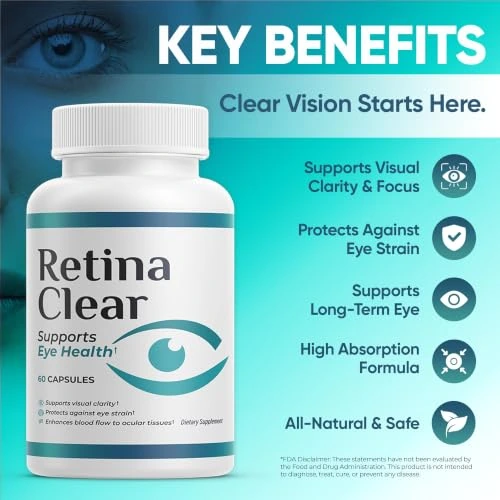
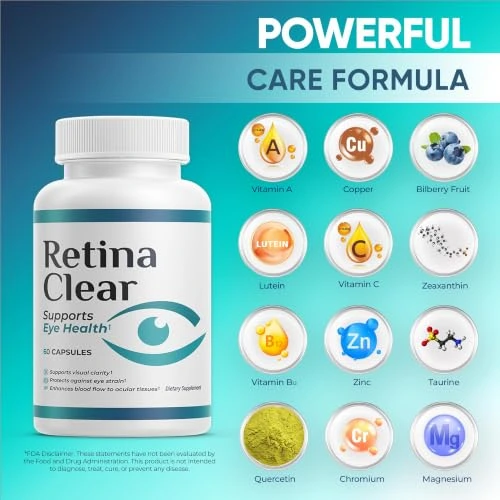
RetinaClear brings lutein, zeaxanthin and bilberry together with vitamin A and a full spectrum of vision vitamins and minerals in one daily capsule — the carotenoids lutein and zeaxanthin build the macular pigment that helps the eye manage light and glare. Backed by a 60-day money-back guarantee.
See RetinaClear PackagesWhat helps: making bright light comfortable again
For the everyday causes above, plenty is within your control. These steps target the common triggers and, for most people, take the edge off light sensitivity within days.
Keep the eye surface lubricated
If dryness is part of your picture, preservative-free lubricating drops help restore a smooth tear film so light passes cleanly. Blink fully and often, especially at screens, and keep the air around you from getting too dry with a humidifier or by moving away from direct fans and vents.
Wear quality sunglasses outdoors
Sunglasses that block 100 percent of UVA and UVB are one of the simplest, most effective ways to make bright outdoor light comfortable — and they protect your eyes at the same time. Wraparound styles cut side glare, and a brimmed hat adds shade. One caveat: do not wear dark glasses indoors all day, because constantly shading the eyes can make them more light-sensitive over time, not less.
Cut glare with the right lenses and lighting
An anti-reflective coating on your glasses reduces reflected glare from screens and headlights. Indoors, aim for even, moderate lighting rather than a bright screen in a dark room, and lower screen brightness to match your surroundings. Warmer, softer light in the evening is easier on tired eyes.
Rest your eyes and keep your prescription current
Use the 20-20-20 rule at screens, get enough sleep, and book regular eye exams so your prescription stays accurate. Well-rested, well-corrected eyes cope with light far better than tired, straining ones. For the wider routine, see daily habits to protect your eyesight naturally.
When light sensitivity needs a professional
Mild, everyday sensitivity that eases with the steps above is usually nothing to worry about. But some patterns call for prompt professional care rather than home remedies. See an eye-care professional or seek urgent care if your light sensitivity:
- comes on suddenly or is severe;
- affects one eye in particular;
- comes with eye pain, redness or discharge;
- arrives with a bad headache, nausea or blurred vision;
- follows an eye injury or getting something in the eye.
These combinations can point to conditions that need proper assessment and, sometimes, prompt treatment. Trust your instincts — if your eyes feel painfully sensitive or something has changed quickly, get it checked.
One capsule, a full vision blend
Support comfortable everyday eyes with lutein, zeaxanthin, vitamin A and a full-spectrum formula, made in the USA in an FDA-registered, GMP-certified facility. Best value on the multi-bottle packs.
Order RetinaClear Today
Where a daily supplement fits
Food and habits come first, but the nutrients that support the eye's handling of light are worth knowing about. The carotenoids lutein and zeaxanthin concentrate in the macula, where they build the yellow macular pigment that helps filter high-energy light and manage glare — and because the body cannot make them, they must come from diet or supplementation. That is the everyday, nutrient-first thinking behind RetinaClear: a once-daily capsule combining lutein, zeaxanthin and bilberry with vitamin A and more than a dozen supporting vision vitamins and minerals, designed to help fill dietary gaps as part of a broader routine. It is not a treatment for photophobia or any condition, and it is no substitute for an eye exam — think of it as the nutrient foundation your habits and professional care sit on. Consistency matters, since these nutrients build up gradually.
| Who we are | An independent team that researches and reviews everyday eye-health questions in clear, practical language. |
| How we work | Every guide is fact-checked against reputable eye-care sources and kept up to date. Read more about us. |
What the research says about light sensitivity
Photophobia — discomfort in ordinary light — is a symptom rather than a disease, and it sits at the junction between the ocular surface and the nervous system that carries pain from the face.
A review in Headache asks the question plainly — so what is photophobia, anyway? — and shows how loosely the term is used and how much of the mechanism remains unsettled (PMID 24111735). That uncertainty matters, because it means brightness sensitivity is a signal to investigate rather than a diagnosis in itself.
The commonest everyday explanation is far more ordinary. The TFOS DEWS II Definition and Classification Report describes dry eye disease as a multifactorial disease of the ocular surface with loss of tear-film homeostasis at its core (PMID 28736335), and an irritated surface makes light harder to tolerate. Where light sensitivity arrives with a red eye, the sorting guide in The American Journal of Medicine on management of the red eye treats it as a feature that raises concern rather than lowers it (PMID 16564769).
Related reading, depending on what else you notice: what causes red, bloodshot eyes if the whites are inflamed, how to protect your eyes from sun and UV damage if outdoors is the trigger, and why your night vision is getting worse if headlights are the problem.
FAQ
Why are my eyes sensitive to light?
Everyday light sensitivity, called photophobia, is most often linked to dry eyes, tired and strained eyes from screens, glare, uncorrected vision or simply pale eye colour. When the eye surface is irritated or fatigued, bright light feels uncomfortable and makes you squint. Most everyday cases ease with rest, lubrication and glare control.
How can I make my eyes less sensitive to light?
Treat the common triggers: use lubricating drops for dryness, take regular screen breaks, wear quality UV-blocking sunglasses outdoors, cut glare with an anti-reflective lens coating, and keep indoor lighting even rather than harsh. Keeping your prescription current and your eyes well rested also makes bright light far easier to handle.
Is light sensitivity a sign of something serious?
Everyday, mild sensitivity is usually harmless. Seek prompt care if light sensitivity is sudden or severe, affects one eye, or comes with eye pain, redness, headache, blurred vision or a recent injury, as those patterns need professional assessment rather than home care.
Can dry eyes cause light sensitivity?
Yes. A smooth tear film keeps the eye surface comfortable and scatters less light. When the surface dries out it becomes irritated and uneven, which increases glare and makes bright light feel harsh. Managing dry eye often improves light comfort at the same time.
Do sunglasses help with light sensitivity?
Good sunglasses that block 100 percent of UVA and UVB are one of the simplest and most effective ways to make bright outdoor light comfortable, and they protect the eyes at the same time. Indoors, though, avoid wearing dark glasses all the time, as constantly shading the eyes can make them more sensitive rather than less.
References
- Unanswered questions in headache: so what is photophobia, anyway? (Headache, 2013 · PMID 24111735)
- TFOS DEWS II Definition and Classification Report (The Ocular Surface, 2017 · PMID 28736335)
- Management of the red eye for the primary care physician (The American Journal of Medicine, 2006 · PMID 16564769)
- National Eye Institute — Dry Eye
- NIH Office of Dietary Supplements — Vitamin A and Carotenoids fact sheet
- American Academy of Ophthalmology. “Light Sensitivity (Photophobia).” aao.org.
- American Optometric Association. “Dry Eye” and “Computer Vision Syndrome.” aoa.org.
- National Eye Institute. “Dry Eye” and “Protecting Your Eyes from the Sun.” nei.nih.gov.
- National Institutes of Health, Office of Dietary Supplements. “Lutein and Zeaxanthin” and “Vitamin A.” ods.od.nih.gov.
† These statements have not been evaluated by the Food and Drug Administration. This product is not intended to diagnose, treat, cure or prevent any disease. This article is for general information only and is not medical advice; consult a qualified eye-care professional about your individual needs, and seek urgent care for the warning signs described above.