How Lack of Sleep Affects Your Eyes, Vision and Tear Film
Independent guide · affiliate disclosure: RetinaClear.com is an independent publisher, not the manufacturer or seller. Some links on this page are affiliate links and we may earn a commission — at no extra cost to you — if you buy through them. This article is general information, not medical advice.
| The short version | Sleep is when your eyes rest and the tear film is replenished. Too little sleep leaves eyes dry, red, tired and prone to blur and twitching. |
| Common effects | Dry, gritty eyes, redness, eyelid twitching, fluctuating blur, light sensitivity, dark circles and daytime eye fatigue. |
| What helps | Aim for 7–9 hours, keep a regular schedule, wind down screens before bed, and support the eyes with hydration and good nutrition. |
| See a professional | If blur, twitching or discomfort persist even when you are well rested. |
| More than tiredness | Sudden vision loss, double vision or a curtain across your sight is never “just tiredness”. Treat it as an emergency. |
| Call emergency services | Sudden blurring or double vision alongside headache, weakness, facial droop or slurred speech can be a stroke. |
| Same-day eye assessment | Sudden loss of vision, a dark curtain or shadow across your sight, a burst of new flashing lights, a sudden shower of floaters, or severe eye pain. |
| Also urgent | Any blow to the eye, a penetrating injury or a chemical splash. Irrigate a chemical splash with clean water immediately, then get help. |
| Not a supplement question | None of the above is treated by a dietary supplement. RetinaClear is not a treatment, drug or cure for macular degeneration, glaucoma, cataract, diabetic retinopathy or any other eye disease. |

Most of us know that a bad night's sleep leaves us foggy and irritable — but it shows up in your eyes just as clearly. Dry, gritty, red eyes in the morning, a stubborn eyelid twitch by mid-afternoon, vision that feels soft at the screen: these are the everyday signatures of an eye that has not had enough rest. Lack of sleep affects your eyes and vision in ways that are usually temporary but genuinely uncomfortable, and understanding the connection is the first step to fixing it. This guide explains what sleep does for your eyes, what happens when you skimp on it, and the habits and nutrients that help your eyes recover.
What sleep actually does for your eyes
Your eyes work hard all day — focusing, tracking, adjusting to light, and blinking tens of thousands of times — and sleep is when they recover. Overnight, with the lids closed, the surface of the eye is bathed and replenished, the tear film is restored, and the tiny muscles that control focusing get a proper rest from a day of close-up work. Sleep is also when the body carries out much of its general repair and maintenance, clearing metabolic by-products and restoring tissues. Shortchange that overnight recovery and your eyes start the next day already behind, without the reserves they need to stay comfortable.
There is also a simple mechanical point: while you sleep, you are not exposing your eyes to screens, wind, dry air or hours of unblinking concentration. Sleep is, in effect, the longest and most complete rest your eyes get. Cut it short and you remove the very break the eye surface depends on.
How lack of sleep shows up in your eyes
1. Dry, gritty, tired eyes
Poor sleep disrupts tear production and leaves the eye surface under-restored, so tired eyes tend to feel dry, gritty and heavy — the classic “sandpaper” sensation. If your eyes feel worst first thing or drag through the afternoon after a short night, this is usually why. Our guide to why eyes feel dry and tired covers the overlap in detail.
2. Redness
Under-rested eyes look the part. A dry, irritated surface widens the fine blood vessels on the white of the eye, giving that unmistakable bloodshot, fatigued appearance the morning after a late night. We cover this fully in what causes red, bloodshot eyes.

3. Eyelid twitching
That maddening flutter in your eyelid is one of the most common tells of a tired body. Eyelid twitching (myokymia) is strongly linked to the cluster of tiredness, stress, caffeine and eye strain that surrounds poor sleep. It is harmless and usually settles with rest, but it is your eye's way of asking for a break — more in why does my eye keep twitching.
4. Fluctuating or soft focus
When you are short on sleep, tired focusing muscles and an unstable tear film can make vision feel soft, hazy or fluctuating, especially during long screen sessions. It is generally temporary and clears with rest and blinking. Persistent blur that stays even when you are well rested should be checked, but the run-of-the-mill “my eyes won't focus properly today” after a bad night is a fatigue effect.
5. Light sensitivity and eye fatigue
Tired eyes are often more sensitive to bright light and glare, and they fatigue faster during the day — you feel the strain sooner and it is harder to shake off. Sound familiar around a long, under-slept workday? Pairing better sleep with the screen routine in how to reduce eye strain from screens tackles both ends of the problem.
6. Dark circles and puffiness
The thin skin around the eyes shows fatigue readily. Poor sleep can leave that area looking darker and more puffy, partly from fluid pooling overnight and dilated vessels showing through. It is a cosmetic effect rather than an eye-health one, but it is a reliable sign your eyes have not had the rest they need.
Support well-rested eyes from within
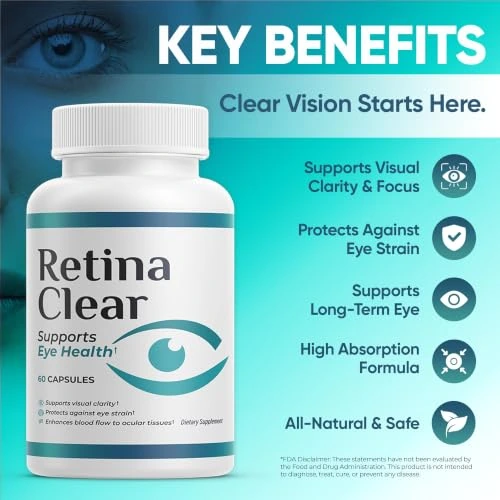
When rest is in short supply, everyday nutrition matters even more. RetinaClear combines lutein, zeaxanthin and bilberry with vitamin A and a full spectrum of vision vitamins and minerals in one daily capsule — steady support as part of your routine, backed by a 60-day money-back guarantee.
See RetinaClear PackagesHow to help your eyes recover: sleep habits that work
The good news is that the effects of poor sleep on your eyes are largely reversible. Better sleep, plus a few eye-friendly habits, restores comfort quickly.
Aim for 7–9 hours — consistently
Most adults do best on seven to nine hours a night, and consistency matters as much as duration. Going to bed and waking at similar times helps your body — and your eyes — settle into a healthy rhythm, so the overnight rest and tear-film restoration actually happen.
Wind down screens before bed
Long evening screen sessions leave the eyes dry and strained going into the night, and the stimulation can make it harder to fall asleep. Set a screen curfew, dim the lights an hour before bed, and let your eyes decompress. If you must use a device late, keep the brightness low and blink often.
Set up the bedroom for rest
A dark, cool, quiet bedroom supports deeper sleep. Keep the air from getting too dry — a fan blowing across your face or arid winter air dries the eye surface overnight and undoes some of the benefit — and consider a humidifier if you tend to wake with dry, gritty eyes.
Mind caffeine, alcohol and hydration
Caffeine late in the day fragments sleep and feeds eyelid twitching; alcohol disrupts sleep quality and is dehydrating, which worsens dry eyes. Stay well hydrated through the day so your body can make a good tear film overnight — a link we explore in can dehydration cause blurry vision.
Rest your eyes during the day, too
You cannot always fix last night, but you can ease today. Use the 20-20-20 rule at screens — every 20 minutes, look at something 20 feet away for 20 seconds — blink fully, and take proper breaks. A cool compress and lubricating drops help tired, dry eyes feel human again.
Eat for eye recovery
A colourful, whole-food diet supplies the vitamins, carotenoids and healthy fats the eyes rely on to stay comfortable and resilient — see the best foods for eye health and vision. Good nutrition will not replace sleep, but it gives tired eyes better raw materials to work with.
When to see a professional
The eye effects of poor sleep are usually temporary and improve once you catch up on rest. But book an appointment with an eye-care professional if:
- blurred vision persists even when you are well rested;
- eyelid twitching is constant, spreads to other muscles, or affects your eyelid's movement;
- dryness, redness or discomfort does not settle with better sleep and simple care;
- you have eye pain, light sensitivity or any change in vision.
Persistent symptoms that outlast a few good nights of sleep are worth having assessed rather than blamed on tiredness alone.
One capsule, a full vision blend
Support comfortable, resilient eyes through busy, under-slept stretches with lutein, zeaxanthin, vitamin A and a full-spectrum formula, made in the USA in an FDA-registered, GMP-certified facility. Best value on the multi-bottle packs.
Order RetinaClear Today
Where a daily supplement fits
A supplement is no substitute for sleep — nothing is — but well-rested, comfortable eyes still depend on good all-round eye health, and that is where daily nutrition plays a supporting role. Vitamin A helps maintain the surface of the eye and the mucous layer of the tear film; the carotenoids lutein and zeaxanthin support the macula, where fine detail is processed; and bilberry has a long traditional association with eye comfort. That is the everyday, nutrient-first idea behind RetinaClear: a once-daily capsule combining these with more than a dozen supporting vision vitamins and minerals to help fill dietary gaps. It is not a treatment for tired eyes or any condition, and it is no substitute for professional care — think of it as long-term support alongside good habits. For the wider routine, see daily habits to protect your eyesight naturally.
| Who we are | An independent team that researches and reviews everyday eye-health questions in clear, practical language. |
| How we work | Every guide is fact-checked against reputable eye-care sources and kept up to date. Read more about us. |
What the research says about sleep and the eyes
Sleep is when the ocular surface recovers, and measurements show the tear film deteriorates when sleep is cut short — which is why short nights show up in your eyes before they show up anywhere else.
An experimental study in Investigative Ophthalmology & Visual Science found that sleep deprivation reduces tear secretion and impairs the tear film (PMID 24833736). Work published in Experimental & Molecular Medicine went further, reporting that sleep deprivation disrupts the lacrimal system and induces dry eye disease in an experimental model (PMID 29497171).
The same pattern appears in people. The large Japanese JPHC-NEXT population study reported a relationship between unhealthy sleep status and dry eye symptoms across thousands of participants (PMID 33845221) — consistent with what the laboratory work predicts.
That explains most of what you notice the morning after: the eyelid flutter covered in why your eye keeps twitching, the smeary start to the day described in blurry vision in the morning, and the squinting at bright rooms explained in why your eyes are sensitive to light.
FAQ
How does lack of sleep affect your eyes?
Sleep is when your eyes rest, replenish the tear film and recover. Skimp on it and you tend to wake with dry, red, gritty and tired eyes, and through the day you may notice blur, light sensitivity, eyelid twitching and more eye strain. Most of these effects are temporary and improve once you catch up on rest.
Can lack of sleep cause blurry vision?
Yes, temporarily. Tired, dry eyes and overworked focusing muscles can make vision feel soft or fluctuating when you are short on sleep, especially at screens. It usually clears with rest, blinking and re-wetting the eyes. Blurry vision that persists even when you are well rested should be checked by an eye-care professional.
Why do my eyes twitch when I am tired?
Eyelid twitching is strongly linked to tiredness, stress, caffeine and eye strain — all of which cluster around poor sleep. The twitch is a harmless flutter of the eyelid muscle and usually settles once you rest, cut back caffeine and give your eyes a break. Persistent or spreading twitching is worth mentioning to a professional.
How much sleep do your eyes need?
Most adults do best on around seven to nine hours a night. That gives the eyes enough time to rest, restore the tear film and recover from a day of focusing and screen use. Consistency matters too — a regular sleep and wake time helps your eyes and the rest of your body settle into a healthy rhythm.
Do dark circles and puffy eyes come from lack of sleep?
Often, yes. Poor sleep can leave the delicate skin around the eyes looking darker and more puffy, partly from fluid pooling and dilated vessels. Better sleep, hydration, a cool compress and sleeping with your head slightly raised can help, though some shadowing is simply down to individual skin and anatomy.
References
- Sleep deprivation reduces tear secretion and impairs the tear film (Investigative Ophthalmology & Visual Science, 2014 · PMID 24833736)
- Sleep deprivation disrupts the lacrimal system and induces dry eye disease (Experimental & Molecular Medicine, 2018 · PMID 29497171)
- Relationship between unhealthy sleep status and dry eye symptoms in a Japanese population: The JPHC-NEXT study (The Ocular Surface, 2021 · PMID 33845221)
- National Eye Institute — Dry Eye
- NIH Office of Dietary Supplements — Magnesium fact sheet
- American Academy of Ophthalmology. “Eye Strain: How to Prevent Tired Eyes” and “Eyelid Twitching.” aao.org.
- American Optometric Association. “Dry Eye” and “Computer Vision Syndrome.” aoa.org.
- National Eye Institute. “Dry Eye” and “Keep Your Eyes Healthy.” nei.nih.gov.
- Centers for Disease Control and Prevention. “About Sleep and Sleep Health.” cdc.gov.
- National Institutes of Health, Office of Dietary Supplements. “Vitamin A and Carotenoids.” ods.od.nih.gov.
† These statements have not been evaluated by the Food and Drug Administration. This product is not intended to diagnose, treat, cure or prevent any disease. This article is for general information only and is not medical advice; consult a qualified eye-care professional about your individual needs.